
"Needless vanity"
A deep dive into the significance of early medieval necklaces

I don’t think many early medievalists would argue with me when I say that the gold and garnet artefacts of the period are some of the most iconic. They adorn the front covers of textbooks and museum guides, providing a stark and continual reminder of the fact that the so called “Dark Ages” weren’t really so dark, as so many of historians and archaeologists of the period attempt to remind others around us.
Staring with glazed eyes through the museum glass at the Sutton Hoo shoulder clasps and the huge golden Great Buckle at age 17 helped me descend into my obsession with Anglo-Saxon England and those that inhabited those garments, wondering how on earth they could make such beautiful, sophisticated metalwork without modern tools. These objects acted as a lure for the part of my brain that I’m convinced is inhabited by magpies, and I was hooked for life.
I’ve always been fascinated with historical jewellery and its significance, almost certainly thanks to my aunt (a jeweller) and my uncle (an antiques dealer), who helped nurture my creativity and historical obsessions. Thanks to the skills my aunt taught me, I’ve been making jewellery since the age of 11. In fact, when I’m not working on my research, I’m teaching beginner and intermediate jewellery classes with my local council, and to indulge in my love of historical jewellery and to supplement my income, I create historical and fantasy inspired pieces for my online shop, which I’m going to shamelessly plug here.
(As an aside, if you do like my history work, purchasing my jewellery is probably a more effective way to support me than a paid Substack subscription, and you get some cute earrings to boot. I call that a win-win.)
Back to the early medieval stuff.
I think we all know that jewellery is such a wonderful window into the past for a multitude of reasons, but for this piece, I want to indulge specifically in necklaces and pendants. It helps that the Anglo-Saxons left some truly wonderful examples behind for us to gawk at. Those who have visited the British Museum would have struggled to walk past the incredible Desborough Necklace, a stunning string of garnets and gold with a central golden cross pendant, and before 2022, was thought to be one of the most complex and sophisticated of its type.
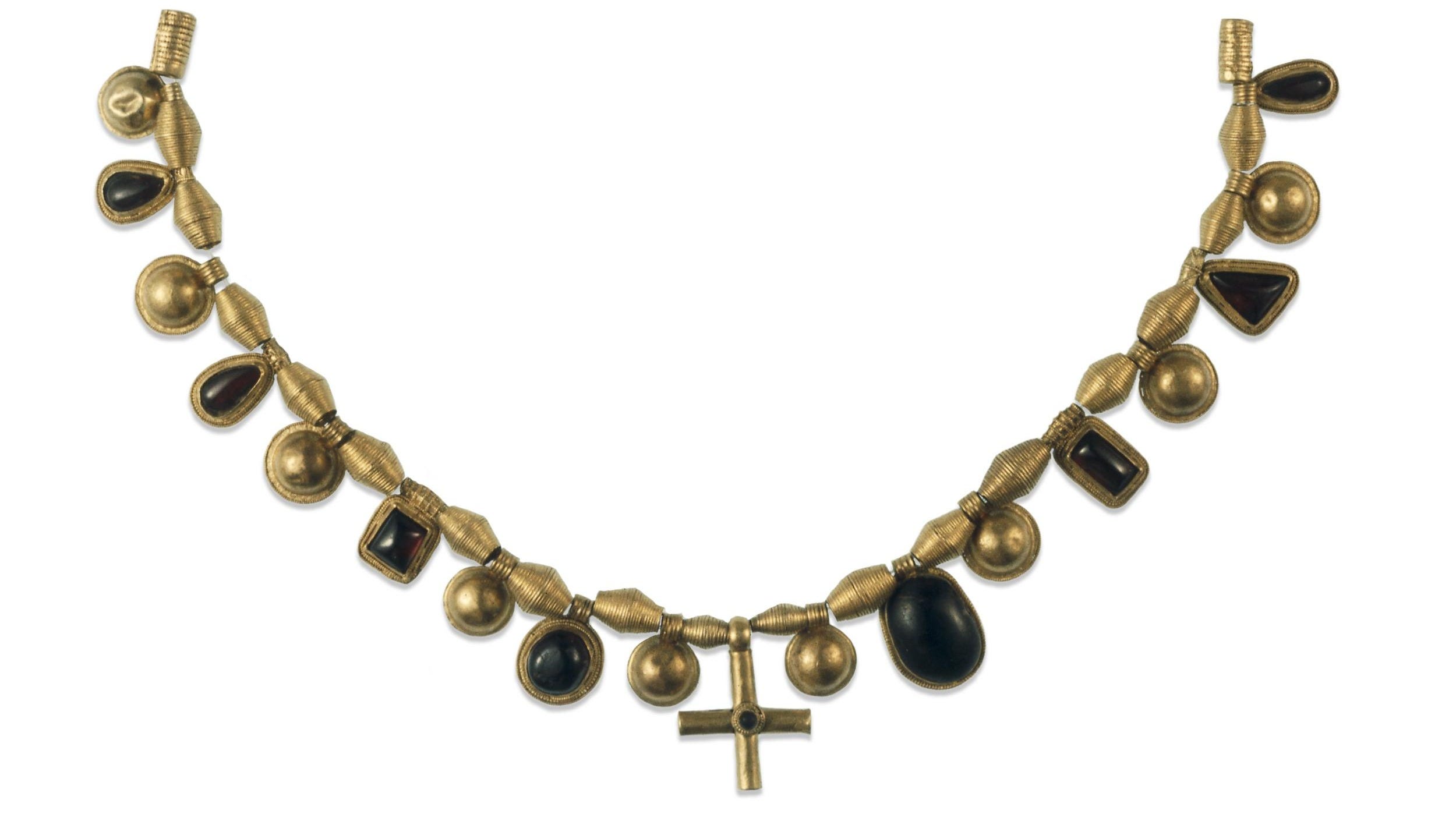
The necklace was discovered in 1876 by a group of labourers who divided the gold and garnet pendants between themselves before being encouraged to hand over the gems for a reward.1 Thanks to this episode, we don’t actually know if the necklace we have is complete, as it’s possible some of the pieces weren’t able to be recovered and are still out there, waiting to be identified. As it currently stands, the piece is too short to be worn as a necklace, but may instead have been worn as a collar.
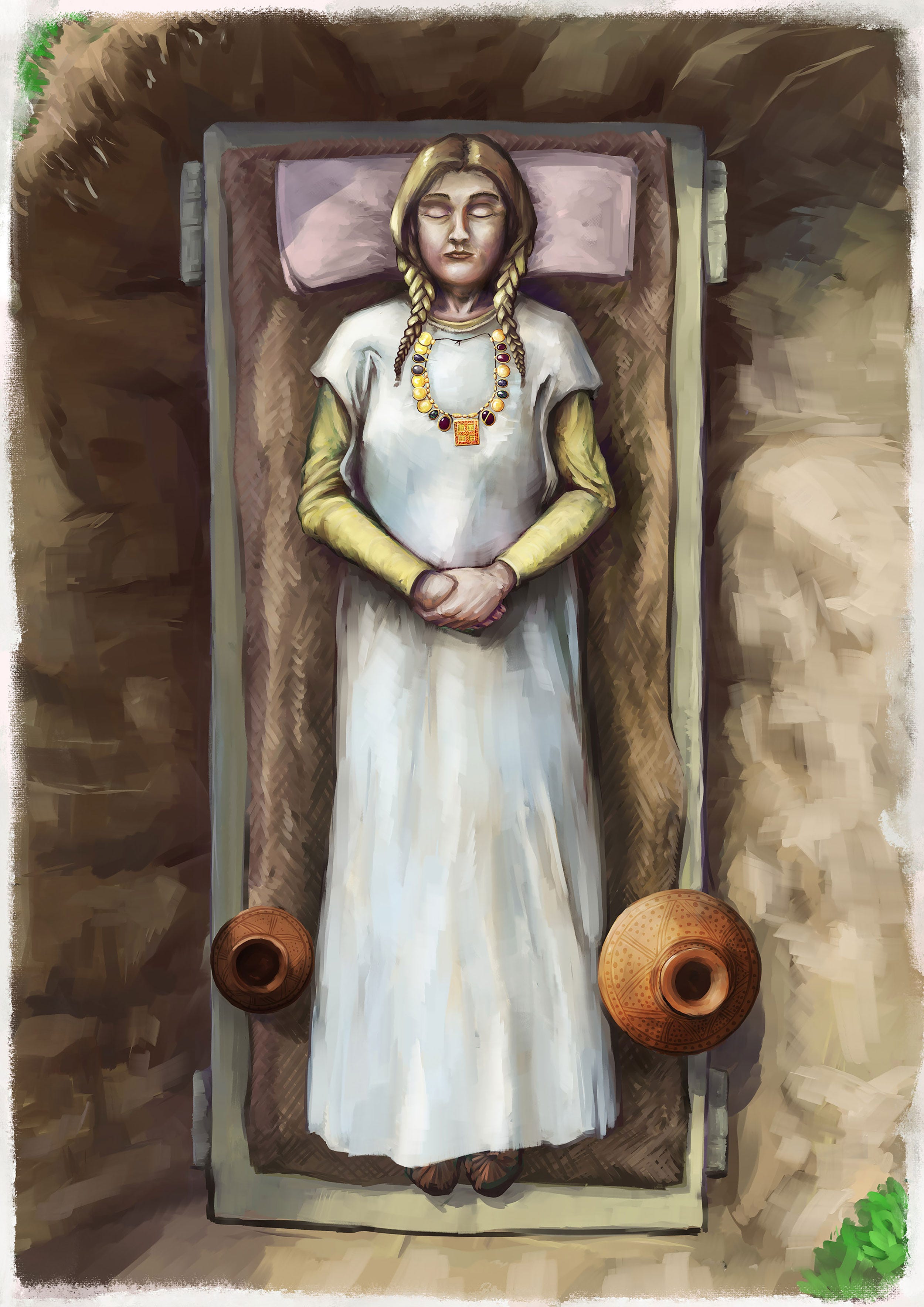
The early medieval community, however, was completely floored when another gold and garnet necklace was discovered in April 2022 at Harpole, in a “once in a lifetime” discovery by the Museum of London Archaeology (MOLA) team, in what was believed to be the burial of a high-status woman.2
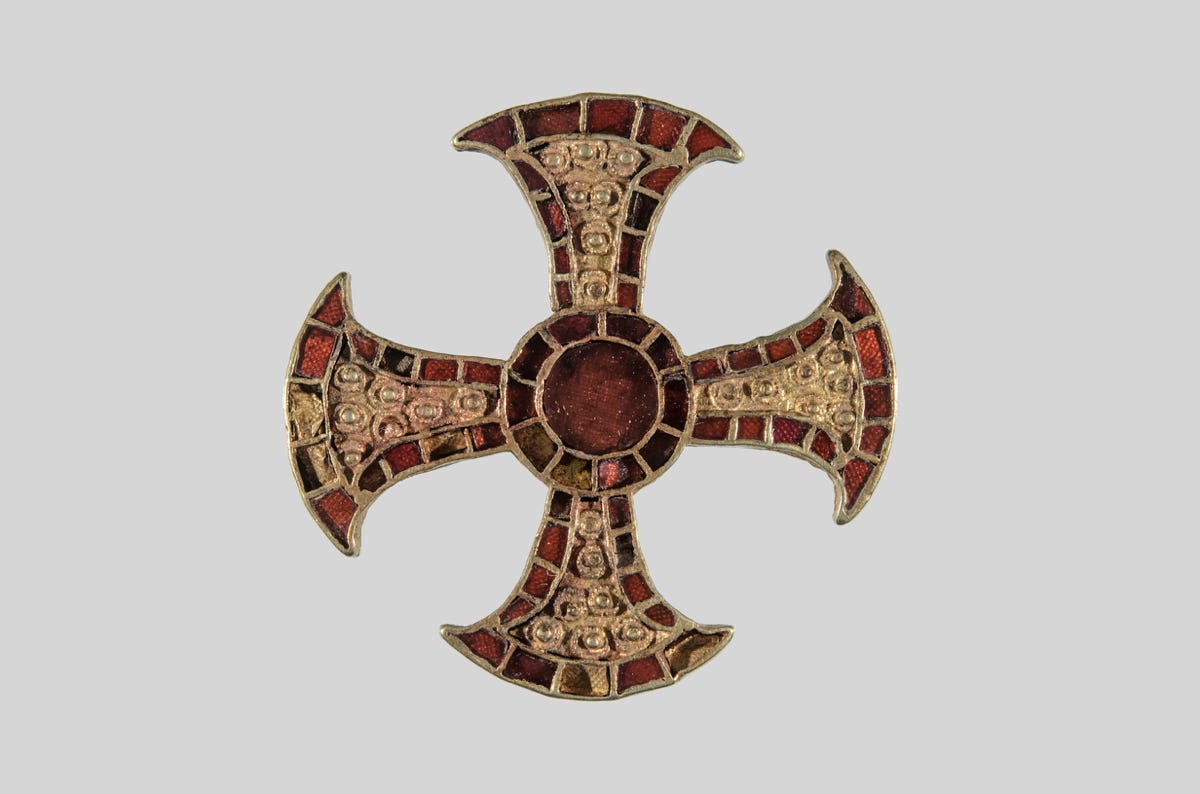
The necklace found was “the most ornate of its kind” found to date, featuring semi-precious stones and glass pendants set in gold, potentially re-used Roman coins and a large, central cruciform pendant of garnet and gold, believed to have been used previously as a hinge clasp before being recycled into a necklace pendant.3
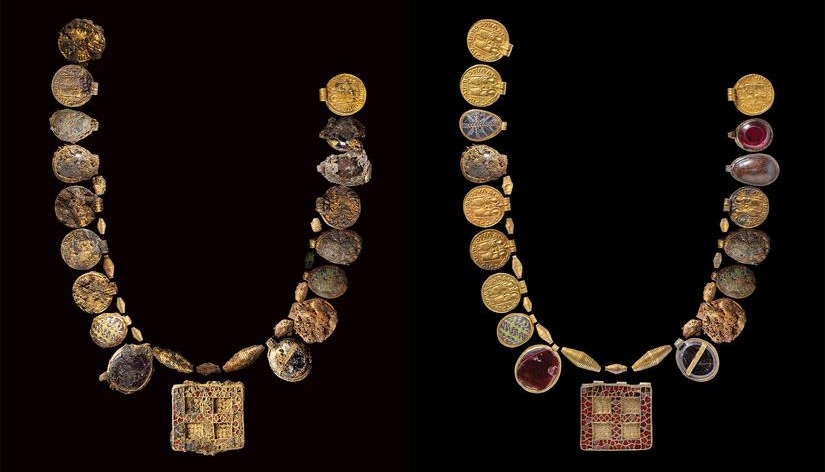
The pendant has some striking similarities to the garnet and gold piece from some of the pieces discovered at the Sutton Hoo ship burial in 1939, particularly the strap-ends, distributors and decorative buckles. Their use of cloisonné and mushroom cells, especially, is incredible in its similarity.
The burial at Harpole bears striking similarities with that of other high status female burials of this time period, for example, the Trumpington bed burial at Cambridge, in which a golden pectoral cross was found. It is understandable, then, why archaeologists believe that the Harpole burial was likely that of a very high status, likely royal, woman, however, investigations are still ongoing to determine the individual’s biological sex.4


It was quite common for royal women to use their influence to expand the power of their royal family by either establishing or running religious houses. It provided a means for the family to extend their influence into the church, whilst also serving as a kind of spiritual insurance, if you like, with rulers’ health and prosperity prayed for and the overall status of the dynasty raised somewhat. Often, those associated with the founding of monastic communities got a relatively quick ticket to sainthood.
Regardless of whether these women were appointed to these positions by their male family members or whether they did this due to their own spiritual callings, such positions undoubtedly allowed these royal women to expand the influence of their royal family in the religious spheres in both the Anglo-Saxon kingdoms and abroad in Europe.
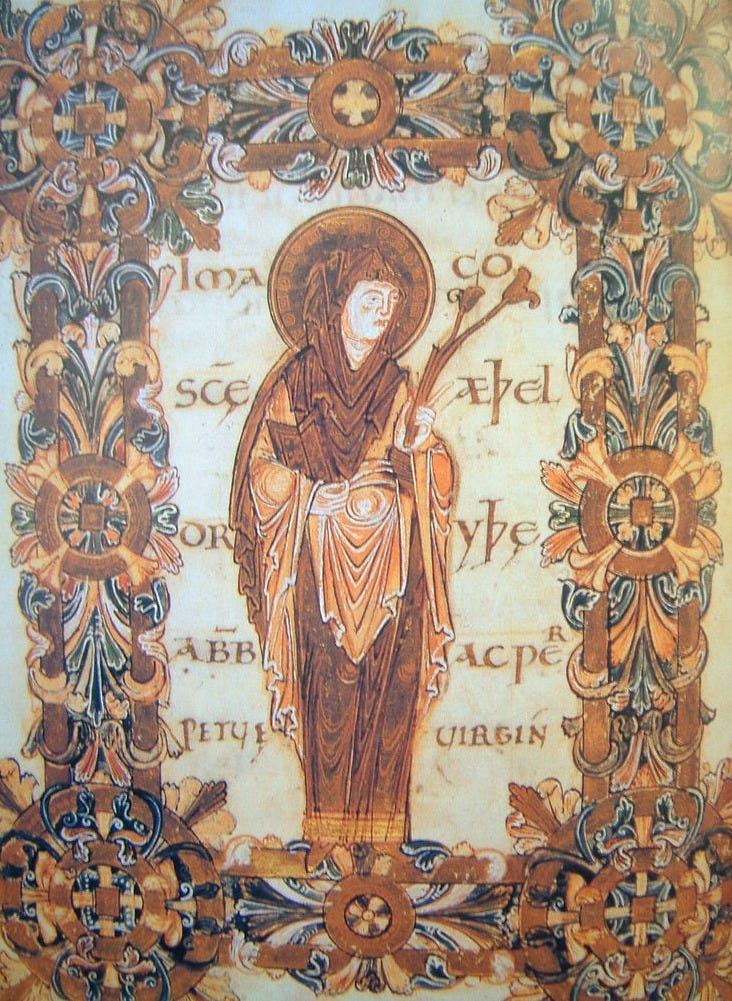
Currently I’m re-reading Bede’s Ecclesiastical History in preparation for the official start of my PhD in around a month’s time, and came across two passages in short succession, both describing powerful holy women who just so happen to be members of royalty, Hild (sometimes called Hilda, daughter of Hereric, who was the nephew of King Edwin of Deira) and Æthelthryth, (wife of King Ecgfrith, and the daughter of King Anna of East Anglia). Curiously, both passages feature necklaces, revealing much about this jewellery piece’s association with holy royal women and contemporary attitudes towards these incredible pieces of metalwork.
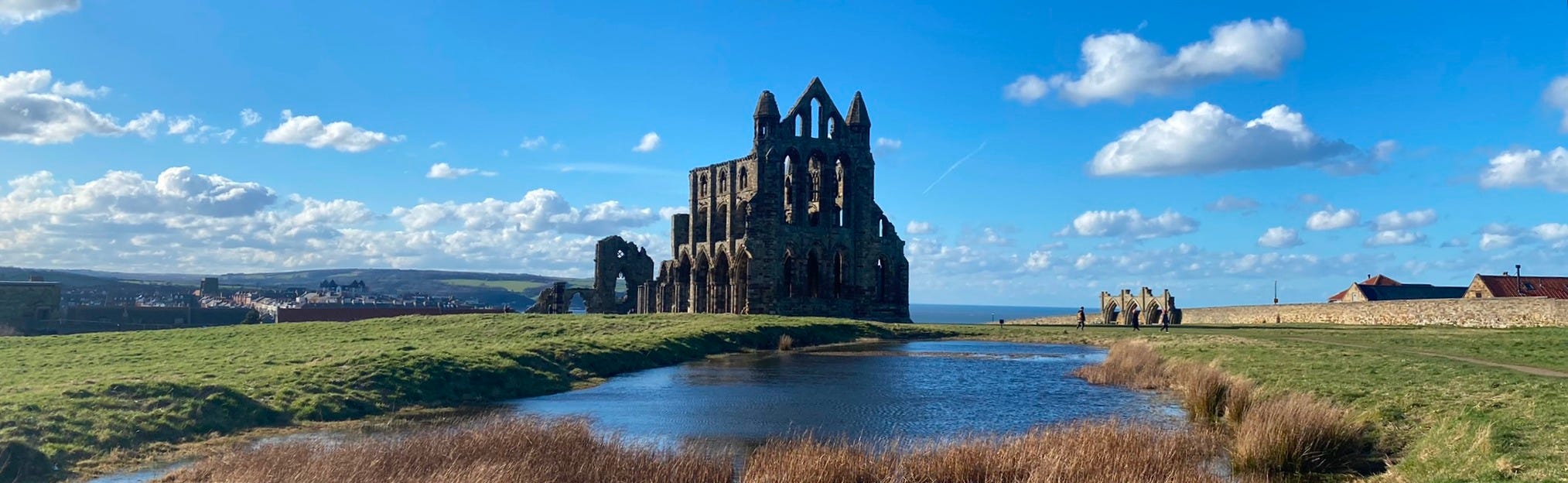
Both Hild and Æthelthryth came from powerful royal families with large religious and secular influences (though it should be noted that these were rarely separated at this time). Hild, was appointed as the founding abbess of Whitby Abbey, known then as Streoneshalh, and according to the Anglo-Saxon Chronicle, Æthelthryth was responsible for the founding of a double monastery at Ely, where she is now interred.
However, it is the premonition that her mother, Breguswith, has before Hild’s birth makes clear the connection between powerful women, holiness and their representation in necklaces specifically:
“While her husband Hereric was living in exile under the British king Cerdic, where he was poisoned, Breguswith had a dream that he was suddenly taken away, and though she searched most earnestly for him, no trace of him could be found anywhere. But suddenly, in the midst of her search, she found a most precious necklace under her garment and, as she gazed closely at it, it seemed to spread such a blaze of light filled all Britain with its gracious splendour. This dream was truly fulfilled in her daughter Hild; for her life was an example of the works of light, blessed not only to herself but to many who desired to live uprightly.”5
It is clear both from the archaeological finds and Bede’s testimony that “a most precious necklace” was a very clear visual indicator of a particularly powerful holy individual. In this case, the vision of a bright, shining necklace (a golden one..?) would be interpreted as a prophetic vision of an royal woman who lived an exemplary religious life.
Whether Breguswith’s vision as described by Bede truly occurred does not actually matter; what it demonstrates is that necklaces such as these are uniquely associated with identifying royal, religious women. The appearance of such a necklace in Breguswith’s vision denotes Hild’s future holiness and social status.
And yet, necklaces could be dangerous. Wearing too many of them could be indicative of vanity for royal women, at least according to Bede, and lead to divine consequences as a result. In Chapter 19 of the Ecclesiastical History recording the circumstances of the death and translation of Æthelthryth, Bede quotes her describing how she acquired an aggressive tumour upon her neck:
“I know well enough that I deserve to bear the weight of this affliction in my neck, for I remember that when I was a young girl I used to wear an unnecessary weight of necklaces; I believe that God in his goodness would have me ensure this pain in my neck in order that I be absolved from the guilt of my needless vanity. So, instead of gold and pearls, a fiery tumour now stands out upon my neck.”6
Clearly Bede believed that there was such a point where a woman could wear too many necklaces, and that this display of vulgarity and excess would come with divine consequences. Æthelthryth apparently wore an “unnecessary” amount, for which God gave her a tumour to assist in purging this sin. It is unclear whether other contemporaries of Bede shared his view regarding necklace excess, since this anecdote is provided as an explanation as to why Æthelthryth had the tumour in the first place, which ends up being miraculously healed upon her translation in 695, as viewed by her doctor.7
The specificity and length of the anecdotes surrounding Æthelthryth’s life, death and translation leads me to believe that Æthelthryth did genuinely have a tumour on her neck that was noted by her contemporaries throughout her life. Given her previous marriage to the Northumbrian king Ecgfrith, it is also highly possible that Bede was writing this chapter from second-hand sources who had known and interacted with the former queen. It should be noted, however, that it is highly unlikely she said the specific words that Bede attributes to her.
Did Æthelthryth herself actually believe that the tumour arose as a result of divine intervention because of her vanity as a young queen, presumably whilst she was married to Tondberct or Ecgfrith, and before her flight to Ely and founding of Ely Abbey? Bede does note that she is buried “by her own command in a wooden coffin, in the ranks of the other nuns, as her turn came”.8 Perhaps she truly did wish to be absolved of her vanity; unfortunately, we cannot ever, definitively, know.
Studying women’s history as an early medievalist is hard. At a time where the lives of women exist in quite murky shadows in the written sources, we are lucky to learn as much as we do about this group of elite, holy individuals. This group of women, and their graves, can tell us much about how they were perceived by their contemporaries via their jewellery, but what we cannot do is extrapolate their experiences and apply them to more women than we should.
Sweeping statements about how “women were revered as holy leaders!” is misleading and should be avoided. We know as much as we do about these particular women because they were recorded and venerated in such a way that posterity would have to take notice. Those who did not conform to the expectations of her society are far more easy to lose to history than their male counterparts. After all, Bede reminds us in his introduction to his Ecclesiastical History:
“Should history tell of good men and their good estate, the thoughtful listener is spurred on to imitate the good; should it record the evil ends of wicked men, the… reader… is kindled to eschew what is harmful and perverse.”
These women and their jewellery answer many questions about the status of holy women, but opens up so many more about those that we can’t access. Æthelfryth managed to redeem herself from her decision to wear too many necklaces as a youth via her penance and holiness, apparently, but given her status as a powerful Christian woman, an abbess with close connections to powerful East Anglian royalty, she was far more likely to be recorded.
The name of Raedwald of East Anglia’s pagan wife, however, is never noted by Bede, yet we do know she existed. Perhaps Bede never knew her name and couldn’t note it down if his sources were incomplete. Perhaps her religion was so contemptable that her omission was deliberate.
Leaving these questions to the side for a moment by way of attempting to draw this piece to a close, it is truly astonishing how much new information we have about these women we are able to acquire in the 21st century. As our archaeological methods increase in scope and scale, it is really quite incredible what we’re able to learn. We’ve gone far beyond the days of the discovery of the Desborough Necklace where we may never know anything further about the individual that wore that necklace in life, as the site was not properly excavated.
Today’s archaeological methods are so extensive that parts of the Harpole burial are still being excavated from the original earth that was removed from the site in 2022, including an incredible processional cross, the likes of which we really have not seen before. Perhaps there’s more of these crosses out there, waiting to be unearthed. I for one cannot wait to read all about MOLA’s new findings once they have been completed. For now though, I’ll just have to keep refreshing their blog and hoping for a new update.
Thank you for reading MR James Appreciation Society!
If you would like to support my work as a researcher, you can subscribe for free, or you can upgrade for additional benefits to help support my outreach work. It’s currently 20% off an annual subscription right now.
If you’d prefer to donate directly instead of subscribing, you can buy me a herbal tea here!
My jewellery work, can be purchased here! “Lowly Earth”, my latest collection, is heavily inspired by the jewellery types and colour schemes found in early medieval grave goods.
Any and all paid subscribers will receive a permanent 25% off discount code for my jewellery.
L. Malpas. “Golds, garnets and guesswork: understanding the Harpole treasure and the Desborough necklace”. Northamptonshire Heritage Forum. Published online 8th February 2024, accessed 10th August 2025. Available here.
K. Newton. “The Harpole Treasure”. Museum of London Archaeology. Published online 7th December 2022, accessed 11th August 2025. Available here.
Ibid.
L. Blackmore, L. Barham, L. Balazs, C. Chinnock and S. Farey. “A newly discovered Anglo-Saxon bed burial at Harpole, Northamptonshire, England”. The European Archaeologist. Published online 11th July 2023, accessed 15/08/2025. Available here.
Bede. Ecclesiastical History. Book IV, Chapter 23 (21).
Bede. Ecclesiastical History. Book IV, Chapter 19 (17).
Ibid.
Ibid.